The Morandi Aesthetic
Giorgio Morandi spent a lifetime painting bottles and bowls in muted, gray-inflected colors that seemed to exist in a space between waking and dreaming. His palette — soft pinks touched with gray, warm whites cooled by shadow, and earth tones that whisper rather than speak — has become synonymous with a kind of refined, contemplative beauty.
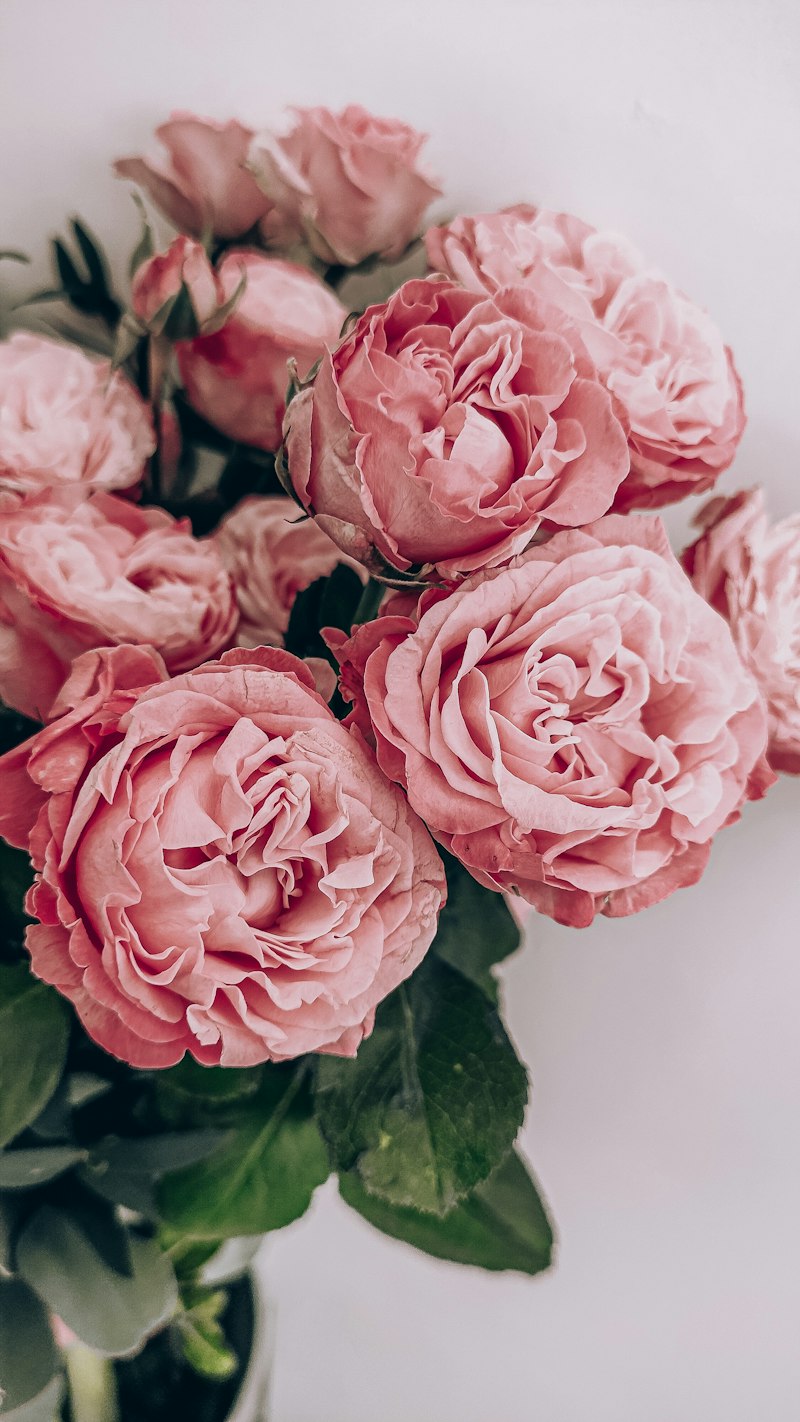
This arrangement translates the Morandi aesthetic into the language of flowers, using David Austin roses as the primary medium. Austin roses, with their cupped blooms and many-petaled centers, are the floral equivalent of Morandi's vessels — objects of quiet, voluminous beauty that reward close inspection.
The Pink-Gray Spectrum
The challenge and pleasure of a Morandi-inspired arrangement lies in working within a narrow chromatic range, finding variation not in hue but in nuance:
- Blush with gray undertones: The primary color — pink that has been quieted, as if overheard through a wall
- Dusty mauve: Where pink meets purple meets gray, the most complex tone in the arrangement
- Warm stone gray: From the foliage and the container, providing the " silence" between notes
- Cream with lavender shadows: The lightest tones, appearing in the innermost petals where shadows gather
Austin Rose Varieties
Several David Austin varieties are ideal for this muted palette:
- 'Constance Spry': Pure pink cups with a myrrh fragrance, the classic Austin form
- 'Evelyn': Apricot-pink with a saucer-shaped bloom that opens to reveal layers of petal
- 'Grace': A warm apricot that reads as muted pink in indoor light
- 'Olivia Rose Austin': Soft pink rosettes with exceptional vase life
The Art of Restraint
A Morandi arrangement requires the same discipline as a Morandi painting — the discipline of leaving things out. Resist the urge to add more varieties, brighter accents, or contrasting elements. Trust the narrow palette to create its own drama through subtle shifts in tone and texture.
Place roses at varying stages of openness, from tight buds to full blooms. Let the container be part of the composition — a matte ceramic vase in warm gray or aged stone. Keep the foliage minimal, allowing the roses to speak for themselves.
"In the space between pink and gray, there exists a color that has no name but speaks more eloquently than either — the color of things understood rather than merely seen."